Mostrando entradas con la etiqueta chochín. Mostrar todas las entradas

viernes, 25 de abril de 2014

Una buena observación de Ganga y no sólo eso

-Últimamente he estado muy ocupado y no he podido actualizar el blog todo lo que me hubiera gustado. A ver si voy colgando todo el material acumulado, que no es poco.


Hace ya dos semanas, estuve por la Bóveda de Toro, en Zamora, una de las pocas zonas donde se puede ver Ganga en la provincia.
Demasiadas visitas al lugar y sólo una observación previa de tres ejemplares que además pasaron de refilón y no dio tiempo casi ni a verlos. Había que cambiar esa racha.

Pues bien, el domingo 13 estuve allí una vez más, eso sí, después de dar una rapidísima vuelta por las alamedas de mi pueblo. Todo estaba muy animado. Cantaban Escribanos Soteños, Trigueros, Pinzones Vulgares, Jilgueros, Pardillos, Ruiseñores Comunes y Bastardos...


Chochín (Troglodytes troglodytes).


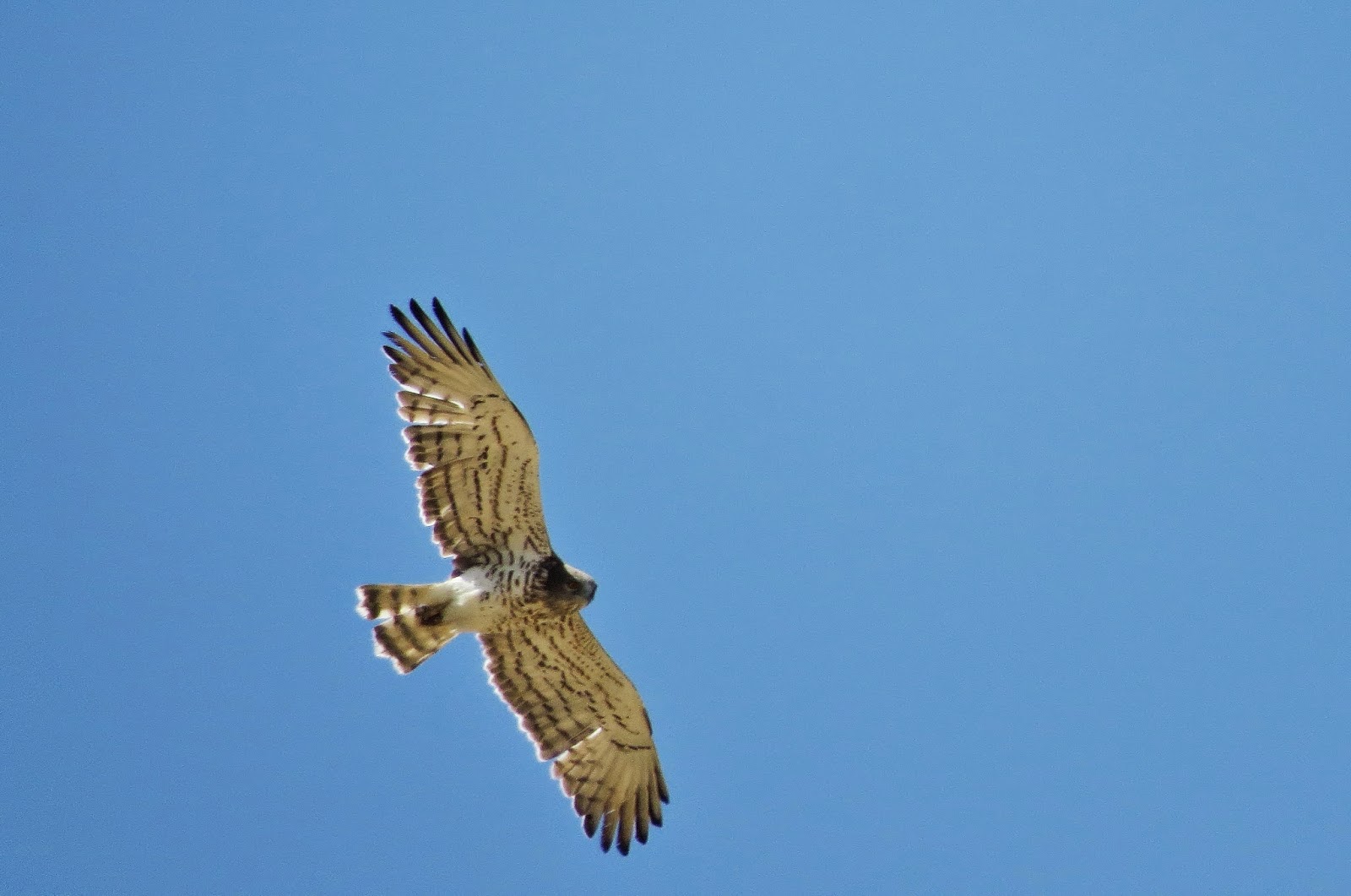
Y como rapaces, esta imponente Culebrera:


Águila Culebrera (Circaetus gallicus).


Ya en La Bóveda, empecé mirando unas alamedas, donde vi entre otras, una Oropéndola, Mitos, Abejarucos, Abubillas y oí un Pito Real:

Abubilla (Upupa epops).

Corneja Negra (Corvus corone).

Eso en cuanto a aves. Respecto a herpetos pude ver un precioso macho de Lagartija Cenicienta. Hacía casi un año que no veía uno:


Lagartija Cenicienta (Psammodromus hispanicus) macho.


Por la zona encontré en numerosas ocasiones esto:

Almendras comidas.


Después de levantar alguna piedra me encontré al autor:

Ratón de campo (Apodemus sylvaticus).

Sólo dos mamíferos más vi; el Conejo y el Zorro:

Conejo de monte (Oryctolagos cuniculus).


Y comenzó la búsqueda de las Gangas.
Pocos pájaros y todos con la boca abierta. El calor era insoportable (eran las 16:00):

Collalba Gris (Oenanthe oenanthe).


Estas dos Cogujadas Montesinas se portaron como nunca, y me permitieron hacerles unas 200 fotos:


Cogujada Montesina (Galerida theklae).


Cogujada Montesina (Galerida theklae).


Dos Montesinas preciosas y de las "típicas": pico corto y con la base convexa, listas del pecho bien marcadas, cresta en forma de abanico y no tan irregular como en la Cogujada Común, un tono general más oscuro del plumaje y "cara de buena persona" (esto es un truco personal).

Una Cogujada Común armuñesa para comparar:

Cogujada Común (Galerida cristata).

Y volvamos a La Bóveda...
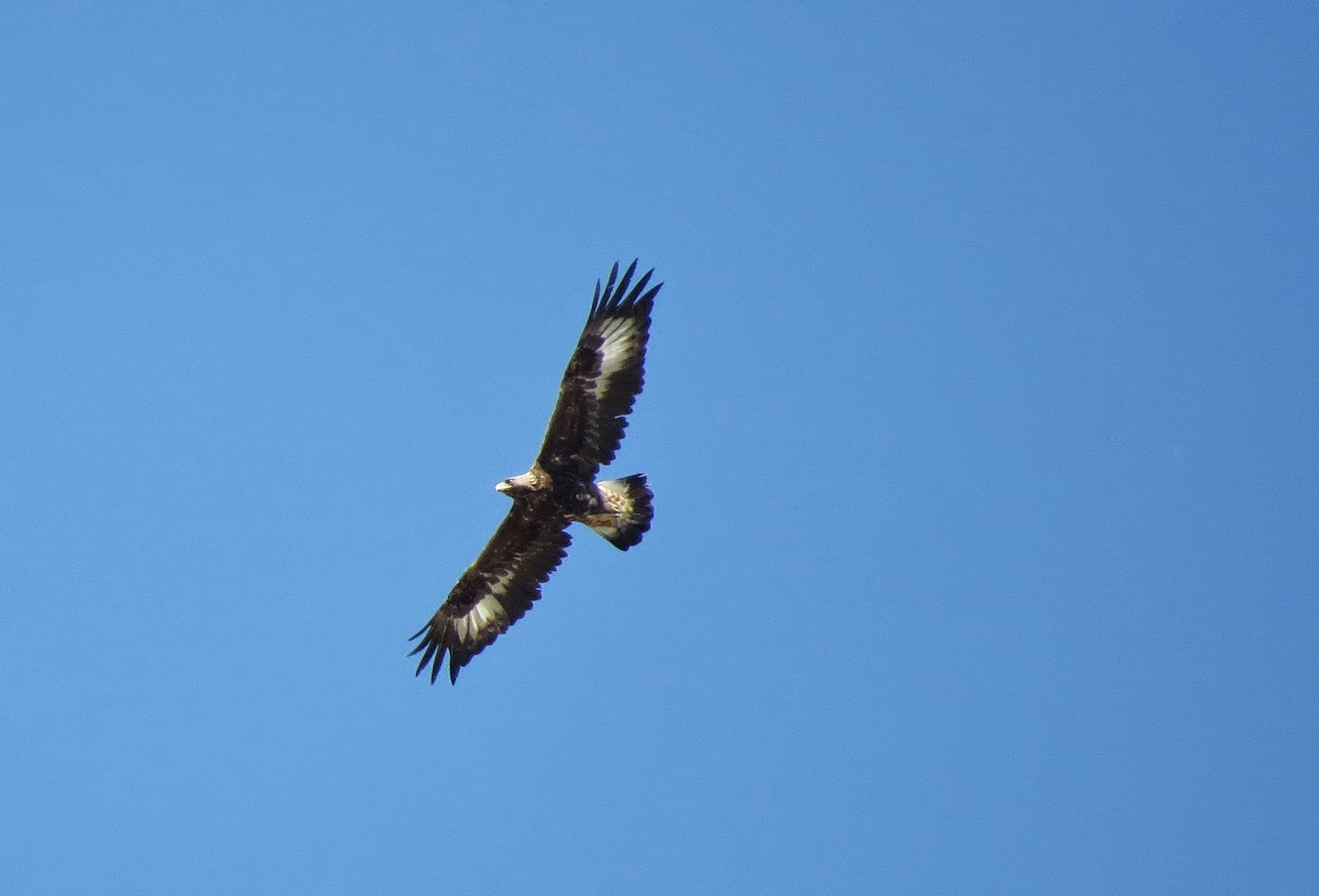
Después de un rato largo de aburrimiento, apareció la reina (rey en este caso) y dio un par de planeos cercanos para mi disfrute:


Águila Real (Aquila chrysaetos) macho de 2º cy.

Sin saberlo, se había metido en el territorio de una Corneja, y desde siempre se ha sabido que rapaces y córvidos no se llevan bien.
Después de atacarla varias veces, la Real huyó:

Con la Corneja Negra (Corvus corone).


Ya que la actividad pajaril estaba muy parada, decidí buscar anfibios por los pilones de la zona:

Pilón tradicional, cada vez más escaso.


No encontré gran cosa:


Larvas de Sapo Corredor (Bufo calamita).

Larva de Sapo Partero Común (Alytes obstentricans).


Ranas Comunes (Pelophylax perezi).

Nunca había visto unas ranas tan grandes.
Al habitar un pozo, no tienen los depredadores que tendrían otras ranas que están en charcas o arroyos.


No fue hasta el atardecer cuando se empezaron a oír unos graznidos, que di por Corneja sin más.
Pero después de pensarlo un poco me di cuenta de que no, que eso no era Corneja, que eso era Ganga.

Justo en ese momento volvieron a reclamar y un grupo de tres me sobrevoló y se posó en una tierra de guisantes:

Gangas (Pterocles alchata).

El contraluz era brutal...

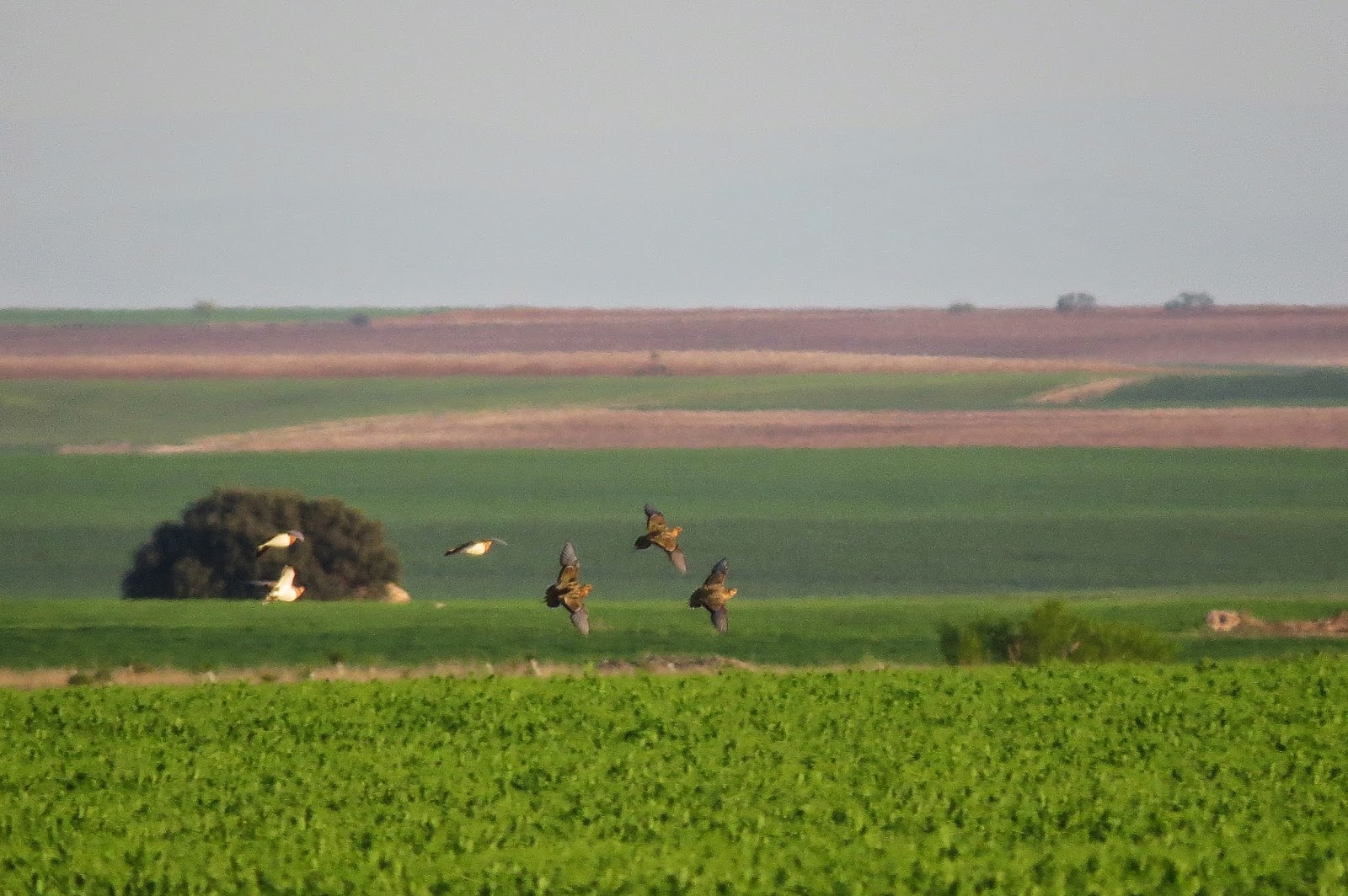
Poco después comenzaron a llegar pequeños bandos, que en total sumarían 20-22 ejemplares, y esta vez sí, pude disfrutarlas a placer durante un buen rato viendo sus idas y venidas:


Gangas (Pterocles alchata).


Mientras veía las Gangas enfoqué también tres Sisones y varias Avutardas, aparte de las abundantes Calandrias y dos Palomas Zuritas:


Avutardas (Otis tarda) hembras.

Avutarda (Otis tarda) macho.


Sisones (Tetrax tetrax).


Y así acabé mi tarde de domingo...

UN Saludo.

sábado, 12 de abril de 2014

Bournemouth (England)

-Some weeks ago, I have spent some days visiting Bournemouth, an english city placed next to Plymouth, on the south-east coast of Great Britain:

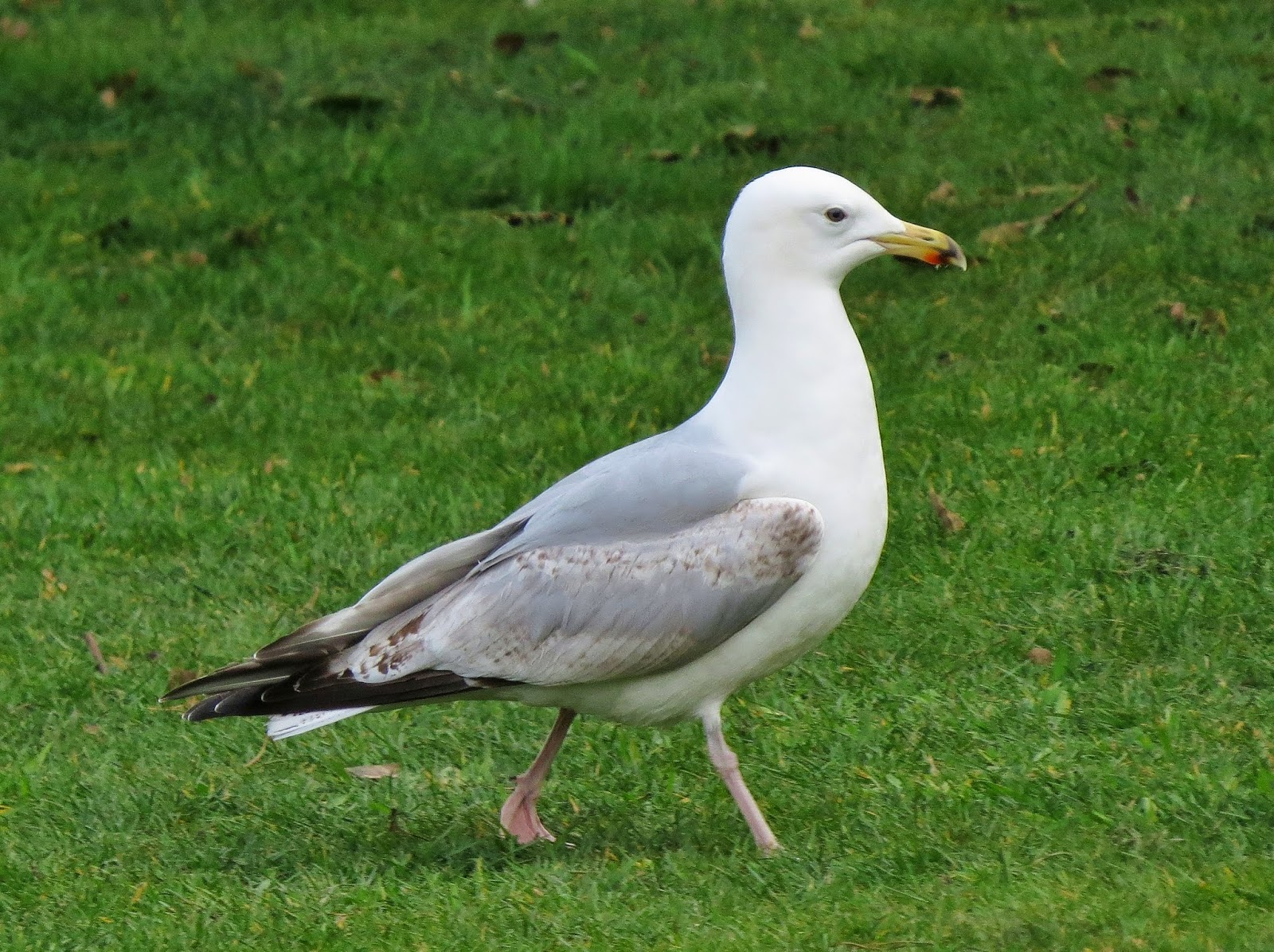
Herring Gull (Larus argentatus) 2º cy flying in Bournemouth's beach.


Although the main reason of the trip was not the birdwatching, I took advantage of some moments to look for birds:

The coast.


The arrival day, I went for a walk accompanied with a friend for the riverbank of the river Stour.
We did not sight anything of interest; the typical birds of british gardens.
Grey Squirrels were common:

Jay (Garrulus glandarius).


Carrion Crow (Corvus corone).


Grey Heron (Ardea cinerea).


Robin (Erithacus rubecula).


Great-spotted Woodpecker (Dendrocopos major) female.


Wren (Troglodytes troglodytes).


Jackdaw (Corvus monedula) with partial leucism in primaries.


Grey Squirrels (Sciurus carolinensis).


The nearness of the birds attracted my attention. They were not run away, as in Spain tend to happen.
Probably this is due to the treatement they receive: Whereas in Spain they accept beatings and stone-throwings, in England they accept feeding places and nesting boxes.

Spanish people do not realize, but Spain possess the greatest biodiversity of the whole Europe, and to tell the truth, we do not do very much for preserving it...


The second day, I could know Christchurch priory. In the nearby river Avon, I saw a lot of Mute Swans, Herring Gulls and Black-headed Gulls. Also a Tufted Duck feeding calmy with Mallards in one of the canals:


Mute Swan (Cygnus olor).


Herring Gull (Larus argentatus) adults.


Black-headed Gull (Larus ridibundus) adult.


Tufted Duck (Aythya fuligula) male.


All the Mute Swans were ringed with metallic and PVC ring. Since they let me to approach, I could read the metallic ring, which indicated that they would have been ringed in England.
On the same evening, when I arrived home, I looked in the web cr-birding.org and confirmed his origin: these birds are ringed in the south-east of Great Britain.

After visiting Christchurch, I entertained myself with two Herring Gulls that were preening in a roof.
I took some curious photos:


Herring Gull (Larus argentatus) adult.


This species and the Black-headed Gull were the most frequent birds in the whole trip, and also those that more time I dedicated, especially to the Herring Gull, which was a species I only had observed once previous and in bad conditions, in Santander's bay.

I only annotated a new species for my list, the Fulmar. It was at Jurasic Coast.
When all my schoolmates were taking photos of the landscape, I was trying to sight some seabirds; among the abundant Herring Gulls, there were flush with water other different smaller birds and with a different way of flight.
They were the Fulmars, incredibly birds:


Fulmars (Fulmarus glacialis).


In the same place, I made out in the distance an Oysterchatcher:

Eurasian Oystercatcher (Haematopus ostralegus).


And it had not time to any more in five minutes of observation.

And finally, to end this post, several photos with all the ages of Herring Gull that can be differentiate based on its plumage, and the colour of its iris, bill and legs (except the first year, logically): the second year, the third year, the fourth year, the fifth year and the adult:


2º cy:


Some flights:


In that photo the pale inner primary window is obvious...


3º cy:

With a 2º cy (left).


With a Black-headed Gull (Larus ridibundus).


Some flights:


4º cy:


With an adult.


5º cy:


Adult:


Now Black-headed Gull ages:

2º cy:


Adult:


This bird was ringed in the right tarsus.
But for the enormous quantity of photos I took, I could not have read the metallic ring.
Now I'm waiting for its life history.


I only watched two more species of gulls: the two Black-backed Gulls:

Great Black-backed Gull (Larus marinus) adult.


Lesser Black-backed Gull (Larus fuscus graellsii) 4º cy.


And here finished my short stay in English lands.
Although I did not see a lot of variety, I could entertain, observing and taking photographs to the Herring Gulls, and especially learning on them and its complicated plumages.

Greetings!
Miguel.